



Inside the Pentagon’s 3D Printing Revolution — and the Rising Geopolitical Storms It Must Navigate
The U.S. Army is no longer just a warfighting machine — it’s becoming a mobile, self-sustaining, on-demand manufacturing force, powered by 3D printing, artificial intelligence, and next-gen drone delivery. But as military modernization accelerates, so too do the geopolitical threats facing America from the Middle East to the Pacific.
On a recent episode of The Threat Status Podcast, Lieutenant General Chris Mohan — Deputy Commanding General and Acting Commander of U.S. Army Materiel Command — pulled back the curtain on the Army’s transformation and the battlefield technologies quietly reshaping modern warfare.
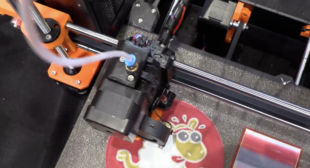
Here’s why the Army wants to 3D print drones
How the Army Is Using 3D Printing to Fight Tomorrow’s Wars
“We’re 3D printing drones. We’re printing parts in the field. And we’re just getting started,” said Gen. Mohan.
Here’s what that looks like today:
-
Drones Printed at Rock Island Arsenal: The Army is currently 3D printing Group 1 UAS drones (under 55 lbs) using “best of breed” design files shared across military units.
-
Electronics Assembled at Tobyhanna Depot: Those 3D-printed frames are shipped to Pennsylvania, where components are integrated and microelectronics are also being 3D printed.
-
Tactical Edge Manufacturing: Field brigades now have mobile machining units with small 3D printers. Replacement drone parts — like rotor blades and control arms — can be printed and deployed on the battlefield via drone delivery.
These changes represent a massive shift from traditional supply chain logistics. “In a future battlefield, a drone is going to be like a bullet — cheap, disposable, and constantly replenished from mobile printers,” said Mohan.
Why This Matters in the Indo-Pacific Theater
Moving gear across oceans is exponentially harder than over land — and the Army knows it.
Gen. Mohan explained:
“Europe has highways. We’ve got alliances. In the Pacific, it’s bilateral partnerships, long flight times, and a maritime chessboard.”
In other words, future conflict with China means the U.S. will need to pre-position supplies, rapidly manufacture parts at sea or on islands, and deploy equipment instantly across vast distances — all of which 3D printing helps solve.
Telemaintenance & AI: The New Digital Arsenal
The Ukraine war served as a testbed for telemaintenance. When Ukrainian troops couldn’t fix donated U.S. weapons, they started calling American liaison officers — and that evolved into daily encrypted video chats with U.S. engineers.
Now, the U.S. Army is going one step further:
-
AI-driven Chatbot Maintenance: Soldiers will soon be guided by virtual assistants that analyze equipment faults, suggest fixes, and even troubleshoot radar systems in real-time.
-
AR/VR Goggles: Smart glasses overlay manuals and diagrams into a soldier’s field of vision.
-
Weapon System 360: A live-data AI platform that monitors the health of every tank, aircraft, and vehicle — and tells commanders where to find backordered parts, down to the name of the CEO responsible for delays.
Rising Global Threats: Israel, Iran, and the Role of the U.S. Military
While the U.S. focuses on modernization, the geopolitical landscape is heating up fast.
Guy Taylor, co-host of Threat Status, reported growing chatter in defense circles that Israel is preparing strikes against Iranian nuclear facilities. With nuclear enrichment violations confirmed by the IAEA, the Trump administration has withdrawn non-essential personnel from the Middle East and is reportedly considering military support options.
Iran has already warned that any Israeli strike would result in retaliation against U.S. interests, raising fears of an escalating regional war.
U.S. Marines Deployed to Los Angeles — Legal and Political Shockwaves
On the home front, 700 active-duty Marines are being deployed to Los Angeles to support immigration raids and protect federal assets amid growing unrest over President Trump’s immigration policies.
Legal scholars and critics have questioned whether this violates the Posse Comitatus Act, which restricts the use of military force on U.S. soil. Trump has not yet invoked the Insurrection Act, but Pentagon officials are treading carefully, emphasizing that Marines will not arrest civilians.
Shipbuilding Crisis: Can the U.S. Keep Up with China?
General Mohan’s remarks also highlight a sobering threat — China is outproducing the U.S. in shipbuilding, both commercially and militarily.
-
China now accounts for over 50% of global commercial ship production.
-
Its navy has surpassed the U.S. by sheer number of vessels.
-
U.S. Navy Secretary John Failen admitted that “our shipbuilding programs are a mess” — delayed, over budget, and increasingly reliant on foreign allies for support.
If a Pacific war broke out tomorrow, the U.S. may not be able to move material fast enough to fight and win.
Final Thoughts: The Future of War Is Printed, Not Shipped
The U.S. Army is sprinting toward a future where logistics are localized, parts are digital, and drones are as common as bullets. From AI-driven maintenance to titanium-printed armor, the battlefront is evolving.
But while the Pentagon adapts at lightning speed, the threats are evolving faster — in Tehran, Beijing, Los Angeles, and beyond.
The message from Gen. Mohan is clear:
“We need to build, fix, and fight — anywhere, anytime, with whatever we have. And now, we’re printing the future.”
Subscribe to the Threat Status Podcast for ongoing updates on defense, geopolitics, and emerging military technologies.
More from this topic:
-
“The Drone is the New Bullet: Inside Tactical 3D Printing Units”
-
“War in the Pacific: Can America’s Industrial Base Handle a Chinese Conflict?”
-
“From Ukraine to LA: How Telemaintenance is Revolutionizing Military Support”



)
Comments